Vacuum metallisation (also spelled vacuum metallising or vacuum metalizing - Physical Vapor Deposition, PVD) is an advanced thin-film process that deposits a nanometric metallic layer inside a high-vacuum chamber. At our STANIAX production plant in Józefów near Warsaw, we coat plastics, metals, glass, and ceramics with mirror-grade 99.99% aluminum, gold, copper, and functional optical or EMI-shielding films.
Unlike wet electrolytic chrome plating, vacuum metallisation is a dry, RoHS/REACH-compliant process completely free of toxic hexavalent chromium (Cr6+). It coats both conductive alloys and non-conductive dielectrics (polymers, glass, ceramics, composites) with repeatable color and gloss across batches from prototypes to hundreds of thousands of parts.
STANIAX Vacuum Metallisation Plant Capabilities
Integrated surface pre-treatment, Base Coat leveling, high-vacuum PVD deposition, and tinted Top Coat line
Thermal evaporation of 99.99% pure aluminum in high-vacuum chambers equipped with planetary rotation fixtures for uniform 3D coverage.
Complete 3-coat system: Leveling Base Coat + PVD Metallic Layer (50-120 nm) + Protective Top Coat (UV-cured or 2K polyurethane/acrylic).
Custom Top Coat tinting for any metallic finish: mirror chrome, 14K/18K/24K gold, rose gold, copper, brass, titanium, brushed inox, and dark chrome.
In-house engineering and fabrication of custom planetary jigs, satellites, and precision masks tailored to complex client geometries.
Functional vacuum coatings: >92% reflective optical mirrors, IR heat shields, and conductive EMI/RFI shielding on electronics enclosures.
Batch quality assurance: ISO 2409 cross-cut adhesion testing, 60° glossmeter verification (GU), and chemical/abrasion resistance checks.
Technical Specifications of the STANIAX PVD Vacuum Metallisation Process - technical specification table
Process Parameter
STANIAX Industrial Standard
Engineering Impact on Final Part
Verification Method
Chamber operating pressure
10⁻⁴ - 5×10⁻⁵ mbar (high vacuum)
Zero gas inclusions, maximum metallic density and mirror clarity
Digital high-vacuum gauges on every cycle
PVD aluminum layer thickness
50 - 120 nanometers (0.05 - 0.12 µm)
Zero dimensional impact on threads, snap-fits, or assembly tolerances
No delamination under thermal shock, flexing, or mechanical impact
Cross-cut tape test per EN ISO 2409
We process prototype sampling runs, medium B2B batches, and high-volume contract manufacturing for clients across Europe.
How Does PVD Vacuum Metalizing Work and Why Is It a 4-Layer System?
In surface engineering, thermal evaporation vacuum metallization (PVD) relies on vaporizing pure metal inside an evacuated chamber. Once atmospheric air is pumped down to 10⁻⁴ mbar, 99.99% aluminum mounted on tungsten filaments is flash-heated above its vaporization point. Because no air molecules obstruct their path, aluminum atoms travel in straight trajectories and condense uniformly onto cooler parts rotating on planetary spindles.
Because the condensed metallic film is less than 0.1 micrometers thick, it replicates the exact microscopic topography of the underlying surface. Achieving a deep, distortion-free mirror on an injection-molded polymer or die-cast part requires pairing vacuum deposition with precision organic coating technology.
Role of the Base Coat and Top Coat in Vacuum Metallising
Every STANIAX vacuum metallisation system is engineered as four synergistic layers:
Layer 1 - Chemically cleaned & deionized substrate: degreased and blown with ionized air to neutralize static charges that attract dust.
Layer 2 - Leveling Base Coat: fills polymer flow lines and mold micro-scratches, forming a glass-smooth film with surface energy tuned for aluminum bonding.
Layer 4 - Protective Top Coat: seals the aluminum against abrasion, hand sweat, cosmetics, alcohols, and UV rays, while allowing transparent dye tinting.
Vacuum Metallisation vs Electroplating - B2B Cost & Material Comparison
Traditional galvanic chrome plating is restricted to metals and special plating-grade ABS etched in hazardous chromic acid baths. PVD vacuum metalizing eliminates toxic Cr6+ effluent, reduces unit production costs by 30-50%, and coats almost any engineering plastic (PC, PMMA, PA, PP, PS, BMC/SMC), glass, or metal.
Key Industries Served by STANIAX Vacuum Coating
Combining Dariusz Staniak’s 30+ years of vacuum engineering experience with modern planetary chamber capacity, we supply four primary industrial sectors across the EU.
Lighting, Optical Reflectors & Automotive Trim
We manufacture and restore headlamp reflectors, industrial LED louvers, surgical lamp mirrors, and exterior/interior automotive emblems and bezels.
Direct Finishing Partner for Injection Molding Plants
We act as your external surface finishing department - receiving raw molded parts directly from your presses and shipping finished, QC-inspected metallized components.
Capacity from pilot runs to thousands of pieces per day
R&D & 3D PRINT PROTOTYPING
Metallization of SLA/SLS Prototypes & Color Sampling
We produce rapid color samples (chrome, gold, satin, gunmetal) on 3D-printed prototypes and pilot molds so design teams can approve finishes before mass tooling.
Express 2-3 business day prototype mode
OPTICS & TECHNICAL LIGHTING
High-Reflectance 98% Technical Mirrors
We coat industrial high-bay reflectors, medical luminaires, and optical mirrors using high-temperature primers rated up to 220°C.
Zero outgassing under thermal load
Industrial Case Studies
Completed Vacuum Metallisation Projects (Inspect with Optical Lens)
Hover over any project image to inspect coating uniformity and mirror depth.
PVD CHAMBER TECHNOLOGY
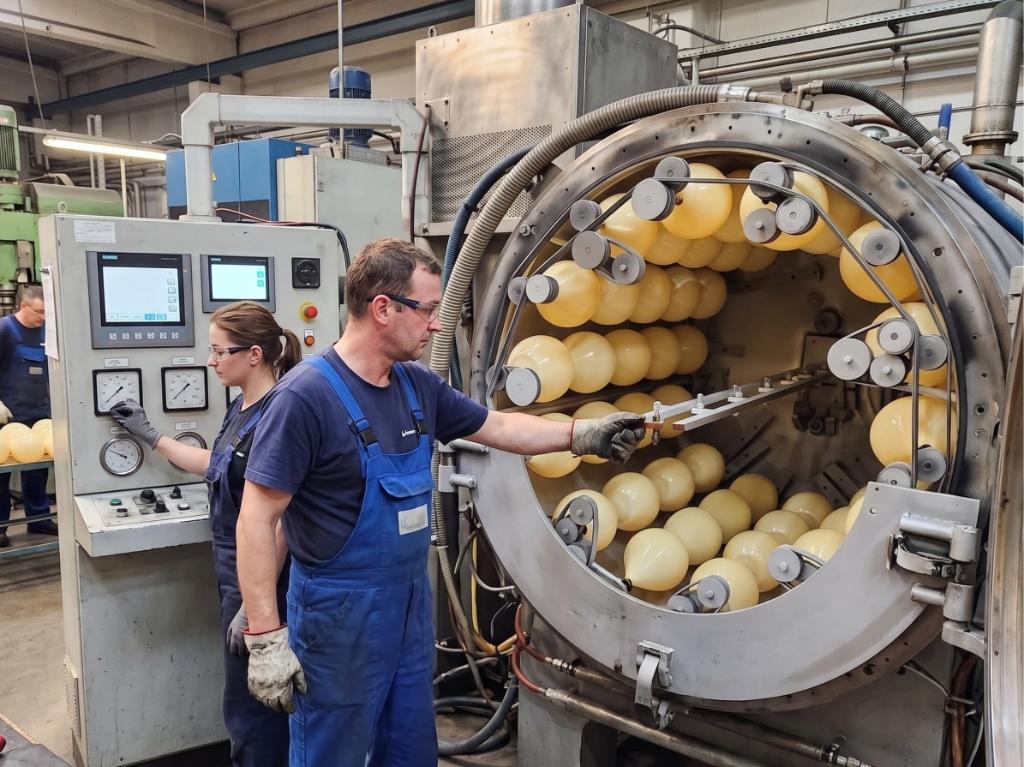
Production Batch Inside the STANIAX High-Vacuum Chamber
Uniform 3D aluminum deposition on complex technical geometries mounted on custom-built planetary satellites.
First-pass yield: >99.2% compliant parts
BEAUTY & LUXURY PACKAGING
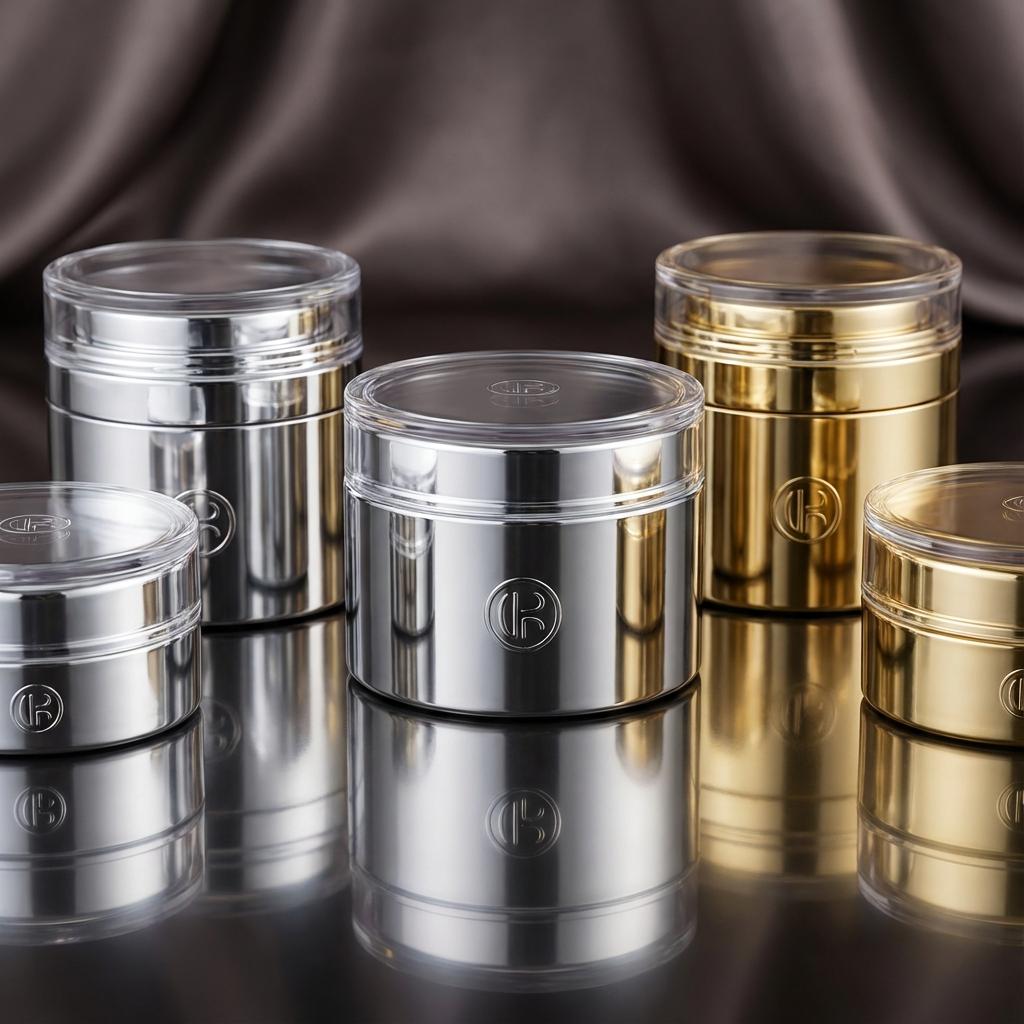
High-Volume Gold & Chrome Metallization of Cosmetic Caps
Mass vacuum metalizing of PP and ABS closures with fragrance- and ethanol-resistant UV Top Coats.
100% resistance to perfume & abrasion tests
INDUSTRIAL & LIGHTING PARTS
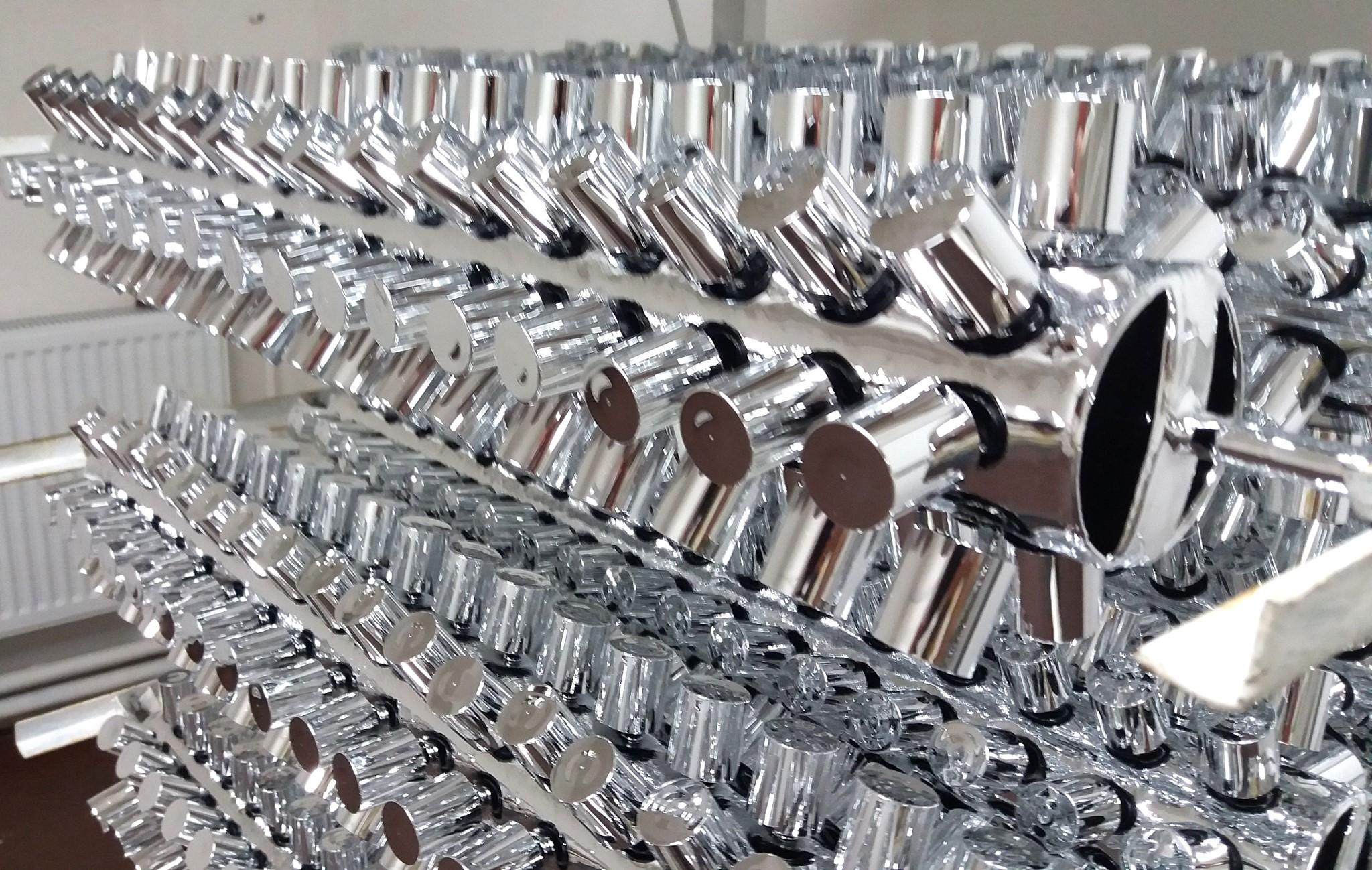
Reflective & Decorative PVD Coatings on Technical Components
High-adhesion primer paired with mirror aluminum and a 2K polyurethane clear coat for harsh operating environments.
Adhesion rating: 5B (ISO 2409)
Industrial PVD Batch & Primer Stack Calculator
Typical high-vacuum planetary rack capacity: small closures (20-65 mm) ~900 pcs/cycle; medium bezels & reflectors (80-240 mm) ~140 pcs/cycle; large housings (250-550 mm) ~28 pcs/cycle across ABS, PC, PP, PA, glass, and SLS 3D prints.
Frequently Asked Questions About PVD Vacuum Metallisation
Technical answers for product engineers, buyers, and packaging technologists.
How does PVD vacuum metallisation differ from traditional electroplating?
PVD vacuum metallisation evaporates 99.99% pure aluminum inside a high-vacuum chamber over a leveling Base Coat and seals it with a protective Top Coat. Unlike galvanic electroplating, it uses zero toxic hexavalent chromium (Cr6+) or acid baths, works on virtually any plastic (not just plating-grade ABS), glass, and metal, and allows effortless tinting into gold, rose gold, copper, or dark chrome at a 30-50% lower unit cost.
Which materials can be coated using vacuum metalizing?
We coat thermoplastics (ABS, PC, PC/ABS, PMMA, PS, SAN, PA, and flame-activated PP/PE), thermosets and composites (BMC, SMC, epoxy laminates, SLA resins), metals (steel, aluminum, ZnAl die-castings, brass), as well as packaging glass and technical ceramics.
Does vacuum metallisation alter part dimensions or clog threads?
The PVD aluminum layer itself is only 50-120 nanometers (0.05-0.12 µm) thick, which is dimensionally negligible. The complete lacquer system (Base Coat + Top Coat) adds 15-35 µm. Where tight mechanical fits or threads exist, we mask critical mating surfaces on our custom fixtures.
What is your minimum order quantity (MOQ) and lead time?
We have no prohibitive MOQ - we quote single prototypes and sampling runs as well as multi-thousand-piece serial contracts. Standard production lead time is 5-10 business days, with 2-3 business day express processing for prototypes.
Is vacuum-metallized coating resistant to UV, scratches, and chemicals?
Yes. Operational durability is governed by the Top Coat. Depending on your specification, we apply hard UV-cured top coats (2H-4H pencil hardness for cosmetic packaging) or flexible 2K polyurethane/acrylic automotive-grade clear coats with UV absorbers for outdoor durability.
How should injection-molded parts be prepared before shipping to STANIAX?
Parts must be molded without silicone-based mold release agents. Silicone migrates into the polymer surface and causes severe cratering ("fisheyes") during Base Coat application. Parts should be packed in clean polyethylene bags or lint-free dividers to prevent transit scuffing.
Request a Quote for PVD Vacuum Metallisation & Sampling
Share your substrate material, part dimensions, desired finish (mirror chrome, gold, satin, technical reflector), and estimated batch volume. We will prepare a detailed quotation and sampling plan.
Serial PVD Vacuum Metallisation (B2B production) · Prototype Metallization & Color Sampling · Technical Metallization (optical reflectors / EMI shielding) · Cosmetic Packaging Metallization (chrome / gold / rose gold) · Engineering consultation on substrate & fixture design
STANIAX Sp. z o.o. · ul. kard. Stefana Wyszyńskiego 116A, 05-420 Józefów, Poland